What should you carry to the first visit?
Prior reports in full, a list of current medicines, and glasses if examination is likely.
From first call to plan
Four stages a patient can follow like a staircase, each one phone-verifiable.
The stages
No clock-slot theatre: four steps around assessment and plan.
A plain conversation about the concern, without registration pressure or paperwork walls.
Date, room and a short list of what to bring, in writing.
History and examination in one unhurried appointment, questions welcome throughout.
A written plan, a referral where it is due, and clarity about what happens next.
About the visit itself
Four cards that stick to process facts, never to proofs of result.
Prior reports in full, a list of current medicines, and glasses if examination is likely.
Yes - a relative or carer can call. No obligation is attached until the time is fixed.
In writing, with the date and the room named. Keep the confirmation for the check-in.
Always. Say so when booking so the room is arranged for it.
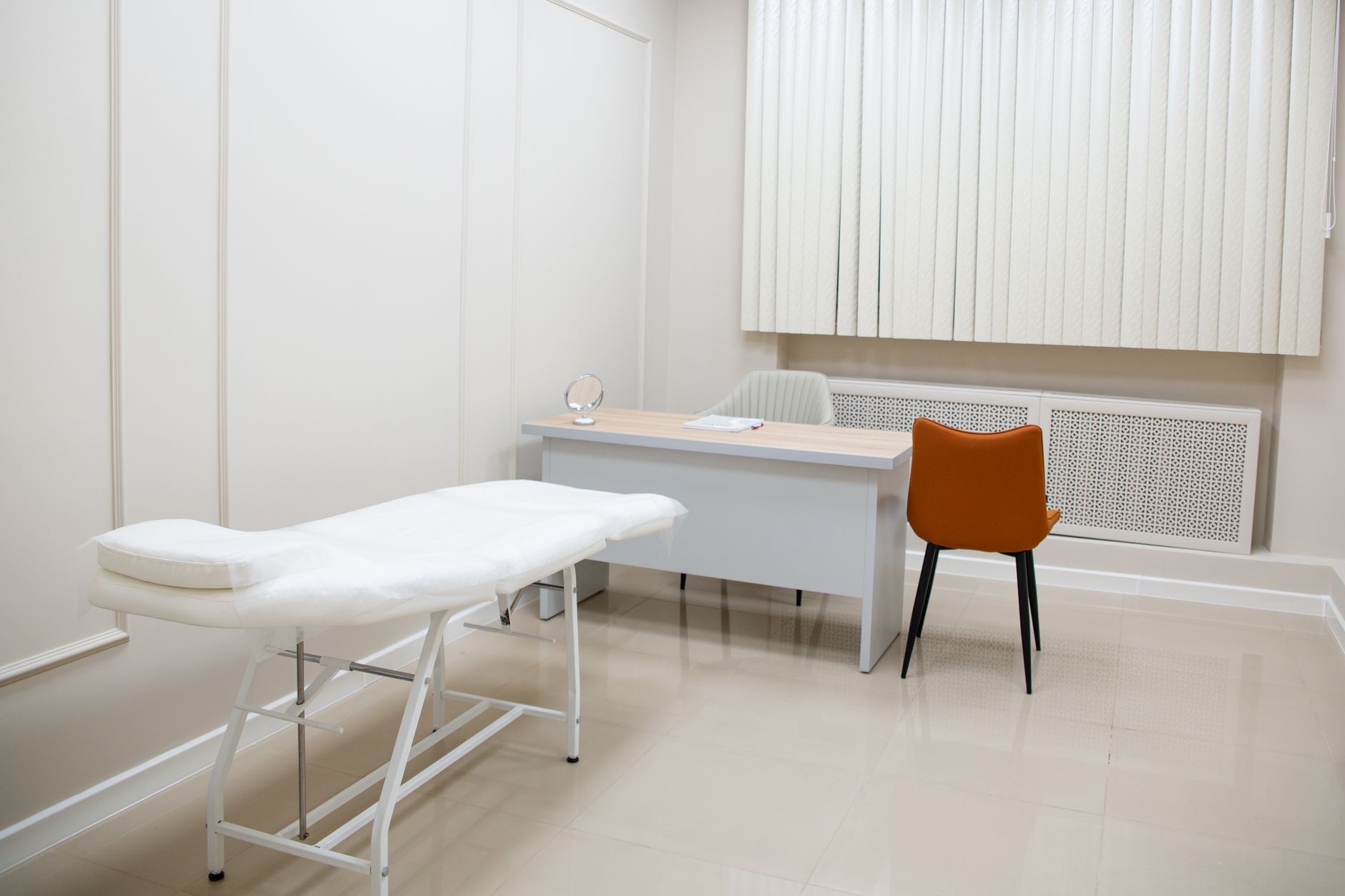
Behind the green door
The room is deliberately ordinary: a desk, an examining couch, a lockable record cabinet. Nothing theatrical - that is the point.